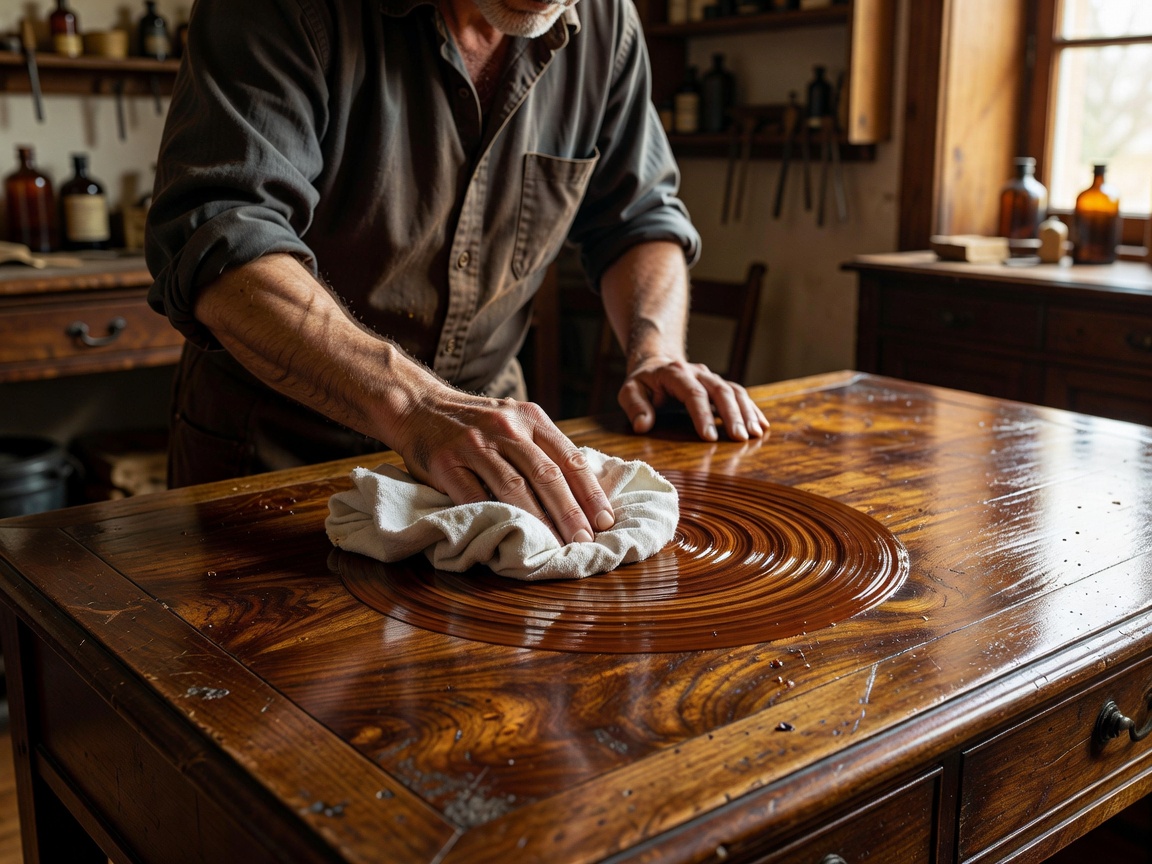
Figure 1: Executing circular figure-eight passes with a freshly charged shellac rubber pad.
The Art of Spirit Varnish Finish
French polishing is not a material, but a precise hand application technique developed in Europe during the early 1800s. By combining dewaxed garnet or button shellac flakes with high-purity denatured alcohol and lubricating oils, the craftsman builds an ethereal depth unmatched by modern synthetic lacquers.
Key Skills You Will Master
- Constructing the traditional wool & linen "fad" or "rubber" pad
- Pumice pore filling (bodying up) open-grained woods like mahogany and walnut
- Controlling cut weights: 2-lb cut vs. 1-lb cut shellac solutions
- Spiriting off lubricating raw linseed oil without burning through shellac layers
Course Curriculum Structure
Module 1: Chemistry of Shellac Flakes
Understanding lemon, button, garnet, and blonde dewaxed shellacs. How harvest seasons in India impact clarity and moisture resistance.
Module 2: Preparing the Rubber
Selecting unbleached cotton core wrap and fine linen cover material. Proper folding technique to prevent ridges during application.
Module 3: Pore Filling with FFFF Pumice Powder
Using raw linseed oil and pumice slurry to pack deep grain pores on mahogany and walnut before color layers begin.
Module 4: Bodying & Figure-Eight Polishing Pass
Rhythmic pad stroke patterns, controlling speed, pressure, and evaporation to build up hundreds of microscopically thin coats.
Master French Polishing Today
Instant lifetime access to all 16 video modules and downloadable workshop guides.
Enroll in Masterclass — $220